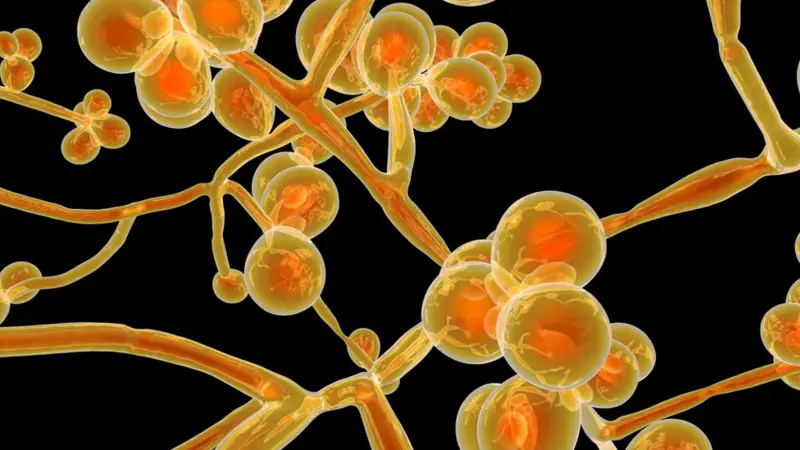
Candida auris (C. auris) has emerged as one of the most concerning fungal pathogens in modern medicine, primarily due to its high level of antifungal resistance and its remarkable capacity for persistence and transmission within healthcare environments. Initially recognized as an opportunistic pathogen, it has increasingly come to represent a broader manifestation of the global antimicrobial resistance (AMR) crisis. Unlike conventional fungal pathogens, the emergence of C. auris reflects not only a biological phenomenon but also systemic challenges related to healthcare governance, antifungal utilization, and diagnostic preparedness across regions. This concern is particularly relevant in Southeast Asian countries, including Indonesia, where increasing antimicrobial resistance, high burden of infectious diseases, and variability in healthcare infrastructure may create favorable conditions for the emergence and under-recognition of fungal pathogens such as C. auris.
Since its first identification in 2009, the near-simultaneous emergence of C. auris across multiple continents is now understood to involve several genetically distinct clades that evolved independently in different geographic regions. This pattern suggests a complex interplay between evolutionary adaptation and global selective pressures, rather than dissemination from a single origin. Such findings underscore the importance of considering both ecological and anthropogenic drivers in understanding its emergence.
Mechanisms of Antifungal Resistance: Beyond Genetic Determinants
At the molecular level, antifungal resistance in C. auris has been associated with mutations in key target genes, including ERG11, which is involved in ergosterol biosynthesis, and FKS1 and FKS2, which encode subunits of the β-1,3-glucan synthase complex targeted by echinocandins. However, interpreting resistance solely through a genetic lens risks oversimplifying what is fundamentally a multifactorial phenomenon.
Increasing evidence suggests that resistance in C. auris is better understood as the outcome of dynamic interactions between intrinsic biological adaptation and sustained external selective pressures. Among these, extensive azole use in clinical practice is widely recognized as a major contributing factor, while its potential contribution from agricultural settings remains an area of ongoing investigation. In addition, reliance on empirical antifungal therapy without laboratory confirmation, coupled with the limited implementation of antifungal stewardship programs particularly in resource-limited settings, further exacerbates the development and spread of resistance.
The high prevalence of azole resistance, exceeding 90% in certain regions, therefore reflects not only intrinsic pathogen characteristics but also patterns of antifungal use that may not be optimally regulated. Furthermore, the emergence of echinocandin resistance previously considered a last-line therapeutic option signals a concerning trend toward the potential development of pan-resistant strains, which would severely restrict available treatment options.
Biological Traits Supporting Persistence and Transmission
The success of C. auris as a nosocomial pathogen is strongly supported by its unique biological characteristics. Notably, it is capable of forming robust biofilms that reduce antifungal penetration and increase tolerance to treatment, while also decreasing susceptibility to certain environmental disinfection strategies. In addition, C. auris can persist on surfaces and medical equipment for prolonged periods, facilitating indirect transmission between patients.
Moreover, its tolerance to high temperatures, osmotic stress, and desiccation has been proposed as a contributing factor to its survival in harsh clinical environments. These traits collectively enhance its ability to colonize healthcare settings and complicate infection control efforts.
Clinical and Public Health Implications
Clinically, infections caused by C. auris pose significant challenges, particularly among critically ill and immunocompromised patients, as well as individuals requiring invasive medical devices such as central venous catheters or mechanical ventilation. The most common clinical manifestations include candidemia and other invasive infections, both of which are associated with high mortality rates. These challenges are further compounded by frequent delays in diagnosis and misidentification, which can lead to inappropriate antifungal therapy. Consequently, patient outcomes are highly dependent on timely detection and accurate antifungal susceptibility testing.
From a public health perspective, C. auris represents a serious threat due to its capacity to cause healthcare-associated outbreaks and persist within hospital environments. Its spread highlights critical gaps in infection prevention and control (IPC) practices, surveillance systems, and antimicrobial governance frameworks. In developing countries, including Indonesia, these risks may be further amplified by limited diagnostic infrastructure, potential underreporting, and the incomplete integration of fungal pathogens into national AMR surveillance programs. Although confirmed reports of C. auris in Indonesia remain limited, this likely reflects diagnostic constraints rather than true absence. Conventional laboratory methods frequently misidentify C. auris as other Candida species, leading to underrecognition.
Furthermore, Indonesia faces broader challenges related to antimicrobial resistance, including widespread empirical antimicrobial use, limited access to advanced diagnostic tools such as MALDI-TOF MS, and uneven implementation of antimicrobial stewardship programs. These conditions may create an environment conducive to the emergence and silent transmission of resistant fungal pathogens. Therefore, C. auris should be considered not only an emerging clinical threat but also an indicator of systemic gaps in diagnostic capacity, surveillance, and infection control.
Control Strategies and the Central Role of Diagnostics
Effective management of C. auris requires an integrated and multidisciplinary approach. One of the primary challenges lies in the high risk of misidentification using conventional laboratory methods, particularly those based on biochemical profiling. Therefore, the implementation of more accurate diagnostic technologies, such as MALDI-TOF mass spectrometry and molecular methods including species-specific PCR, are essential. These approaches should be complemented by antifungal susceptibility testing to guide targeted therapy.
Without accurate diagnosis, treatment strategies often remain empirical, potentially contributing to inappropriate antifungal use and further resistance development. In parallel, strict infection prevention measures are crucial, including patient isolation, environmental decontamination using effective disinfectants (e.g., chlorine-based agents or hydrogen peroxide), and screening of close contacts.
The implementation of antifungal stewardship programs is equally important to ensure rational and evidence-based use of antifungal agents. At a broader level, the establishment of integrated national surveillance systems is critical for monitoring epidemiological trends and resistance patterns, particularly in settings where laboratory capacity remains limited.
Conclusion
Candida auris represents a complex and evolving threat at the intersection of antifungal resistance, diagnostic limitations, and systemic weaknesses in global healthcare systems. Its ability to persist in clinical environments, cause invasive infections with high mortality, and develop multidrug resistance makes it a particularly formidable pathogen.
Importantly, this phenomenon is driven not only by biological factors but also by patterns of antifungal use and gaps in stewardship implementation. From a public health perspective, the emergence of C. auris underscores the urgent need to strengthen laboratory capacity, enhance surveillance systems, and implement integrated infection control policies. Without coordinated, evidence-based, and system-level interventions, C. auris has the potential to escalate into a more complex and difficult-to-manage global health crisis.